Surf Coast Trail Marathon 2022

In terms of number of marathons I’ve run, this was to be my “Unlucky for some” race. So I left nothing to chance. I completed a pretty diligent 16 weeks of training, running 705.4kms in total.

An added bonus was most of my training was on the Surf Coast Trail Marathon course, known as the “Surf Coast Walk”. The SCTM sets off from Salty Dog Café (Bella and my local beach walk turnaround point), and finishes at the Fairhaven Surf Life Saving Club. And it’s a simple route, as the Race Director announced. If you’re up to your waist in water you’ve gone too far left. If you’ve crossed Great Ocean Road, you’ve gone too far right.

Most of my final packing and prep has become quite standard over the years, and went to plan, except .. The night before, I wisely left out the Vaseline to apply in the morning to prevent any chafing during the race. Except, it was NOT Vaseline I was applying. Quite the opposite. I could tell from the strong Eucalyptus aroma I was mistakenly giving my tender areas a generous Vix Vaporub! Instead of the cool relief of a moisturising balm, I felt the warm inner glow of a sexually-transmitted disease. It washed off OK. Good thing our Deep Heat isn’t in a similar shaped tub.

Rather than walk the 2kms from home to the start, and organise a ride back from the finish 42.2kms West, I decided to leave my car at the finish & use their shuttle bus back to the race start. It seemed logical, but certainly felt odd to drive the entire distance of a race before shuttle bussing all the way back, only to then run the full distance under my own steam.

At the start line, there were maybe just 200 runners, which was nice and intimate. There seemed to be no sudden influx of runners despite US politician, John Kennedy’s suggestion that gas prices are currently so high that people would find it cheaper to “buy cocaine and just run everywhere.”

The temperature at the start time of 8:30am was much warmer than my training runs which were usually an hour or two earlier in the day. As we set off, I was shocked to see the group in front of me were all vaping. Were they all sharing the same e-cigarette, or did they each have their own cause it looked like they were puffing in unison? As I got closer I realised it was just the steam from their breath. So maybe it was colder than I realised.

I felt reasonably OK throughout most of the distance. There are always moments though when you need to find something to encourage you to keep up the pace, or just keep going. At one of these points I found some extra motivation, hearing quite close behind me a guy coughing and spluttering. I had no choice but to pick up the pace and outrun any potential COVID germs.

At the 39km mark I saw a runner crouching down next to a marshal at the Airey’s lighthouse. He was clearly struggling and looked unable to continue. As I was about to pass him he joked “I’ll give you $50 if you give me a piggyback.” I laughed and apologised, “Not today” (which sounded a bit more suggestive than I hoped). As I painfully shuffled by him, I realised I’d knock him back even if he was offering $50,000.

It was no surprise, the final four kilometres were the toughest. I’ve learned from trail runners it’s fine to walk up hills, guilt free. When my legs were starting to run out of juice, everything started to look hill-like. I tried keeping a little bit of movement ready for the infamous finish line which is halfway up the surf club stairs from the beach. But it proved unnecessary. The high tide had washed away the sand and left the bottom step dangling infeasibly a metre or so above the shoreline. Coming up the alternative final climb of the subway suited me fine. I crossed the line with much relief at 4hr 25mins. This was five minutes under my target time; and 15 seconds per km quicker than my Surf Coast Century relay leg late last year. The SCC Leg 3 was a beast with the same elevation, but SCTM is over twice the distance. So today felt like a good result.

I made use of the surf club’s gloriously warm showers, then after a beer enjoyed cheering on the others still finishing.

All I then had to do was make the journey between Fairhaven and Torquay a fourth and final time. Which at least had an enjoyable pit stop at event sponsor Aireys Pub with some of the Surf Coast Trail Runners. I enjoyed a rewarding free beer (the tastiest of all beers).

Following is the Relive video of my Strava journey on the day, with some photos along the way.
There IS such a thing as data, Benedict Evans

Again I was drawn to Benedict Evans’ emphatic statement that there is no such thing as data (There’s no such thing as data — Benedict Evans (ben-evans.com)). In this essay, Benedict challenges the present infatuation with data, claiming that in practice, data’s value is ineffectual, even bordering on the irrelevant.

He first succeeded at baiting my click with an episode of the same title on his Another Podcast with Toni Cowan-Brown (11 January 2021). Back then I think I surmised their argument is that data gets complicated with ownership and differing source systems, so it’s not worth worrying about too much. In this more recent essay though, perhaps the crux of the argument is more simple.

I was actually hoping that this topic would be in a similar vein to Professor Tom Wilson’s 2002 academic paper, The nonsense of ‘knowledge management’ – which was very formative in my early days of data and information management. In that paper, the professor argued quite successfully that the term KM was little more than a blurring of lines with information management. And that blurring was due to the information field no longer being sexy enough for management consultants and platform roadmaps.

Mr Evans though has come from very different stock, from largely telco market analysis and tech venture capital & industry trends. So it’s unsurprising he (quite sensibly) may have never thought of the discipline of data and information management as sexy.

I didn’t tweak this point at the time. Maybe I assumed due to half a dozen years of appreciating Benedict Evans’ content on Twitter – and as a subscriber to his newsletter for the past couple, that I would always agree with everything he says. Until now this position has held true for topics I don’t remotely understand. And perhaps this is why I immediately bit at this apparent reheating of a position that data (a topic I’ve had two decades of involvement with) is all nonsense.

https://twitter.com/benedictevans/status/1532632592658440194

Benedict was more clear, and correct in his reply. I was hung up with how things were phrased, rather than the accuracy of the claim. To begin an essay with the dismissive premise was actually a wonderful prompt to spark the attention of a student and practitioner of data, information, and architecture. The master stroke however was to go on to say it isn’t worth anything. I of course figured this to mean the personal, intrinsic and ongoing value that our data retains. I found, however, it most probably reflects the kind of returns that a venture capital lens would expect to see in a portfolio.

This point is developed further in the essay, claiming that our Instagram posts mean very little. A quick learner, I tried re-reading this as they mean “very little commercially”. But people aren’t interested in the commercialisation of their data. Quite the opposite. (Although we’ll all have a problem with non-viable platforms if no one is profiting.) Benedict views Instagram likes as “not [being] your ‘my’ data or ‘your’ data alone, and it’s not worth much without the context of all the other likes and follows.” This doesn’t sound like a problem of data not existing, or nonsense. It sounds like much more data exists than we originally conceived, and its ownership and management is complicated.

Similarly for likes on other social media platforms. Adding TikTok and PageRank into this same discussion, he sees “the value isn’t in the ‘data’ at all but in the flow of activity around it”. Yet it somehow omits that this flow of activity is captured, of course, in data. Then it steps further to consider those data streams of human interactions to not be restricted just to the world of the living. He challenges us to see these phenomena as mechanical Turks. I read this as data represents human activity, therefore, like other human processes we can automate without humans, and with scale. I worry what kind of future that will be. They are systems – it correctly highlights – but they’re human systems. By default those will always compose and present human data.

But back to the definitions used. I’m not sure we started with a valid foundation when it begins with “‘data’ is not one thing, but innumerable different collections of information.” Data is generally about one thing, and collections of it progresses to information with adding a context. It’s through context, we can understand. It’s not the other way around. There is little to no value in the isolated values of spreadsheet columns, but if we know the rows represent a highly sensitive context, the overall information asset which is produced has a clearer value and can certainly be leveraged to produce greater insights.

The contrary example the essay used here was combining wind turbine telemetry with specific public transport events. Their unhelpful correlation is pretty obvious. That’s not the fault of data, but the juxtaposition of two completely different contexts. Data relates to things (or events/entities). So very different “things” will rarely have a useful relationship between their data. What can be notable, and perhaps is undersold here (and oversold in plenty of industries) is how the advances in AI can bring potential in inferring and identifying causal relationships between disparate data. Such links may be inconceivable and inaccessible to the capabilities and capacity of human analysis.

Not to stop there, Evans asserts the “uselessness of common assertions” with an interesting example that routing insights from delivering large volumes of restaurant orders may not assist missile guidance systems. I hope not! (Although I think we’ve been through the idea of borrowing military hardware to deliver food.) My view again is that data is merely an atomic representation of the thing. It’s not a useful or achievable goal to make a single pool of all and everything we know about everything in an understandable (let alone actionable) way. For the reasons of analysis, many relatable (but not all) data sets can be brought together for wider insights. At the level of enterprises, data lakes aim to be that comprehensive repository of respective insight. I say respective, because it will still be based on a context of how, and for what, it was collected; and thereby how it might and might not be used. Even climate change won’t boil the ocean quick enough for arbitrary links to be made between everything and everything. And despite Benedict raising the challenge and nonsense of such an activity, I’m not sure that anyone is explicitly asserting they can and will.

The essay ended with a summary comparing the current AI and data concerns, with previous generational concerns associated during the early adoption of databases. It argues that the risks didn’t live up to the concerns of that time. So we shouldn’t worry now about topics of National or strategic data. Maybe Benedict’s position is indeed accurate, but the question will remain who is making most value from key data sets. Data exists everywhere, and vast arrays of data at scale with advanced analytics can tell us things we didn’t know before.

Any new insights that are generated can be used exploitatively before regulators can catch up. Surely this should all be handled with care, which is best done by appreciating its true value. So I like to think, even at a non-macro level, data is somewhat more than a nonsense or in fact not non-existent.

To conclude, I really like the referenced Tim O’Reilly macro quote that ‘data isn’t oil – it’s sand’. But I also like a competing value proposition by kids author & broadcaster, Michael Rosen, in the form of a poem called Words Are Ours. [laughing emoji didn’t work here]

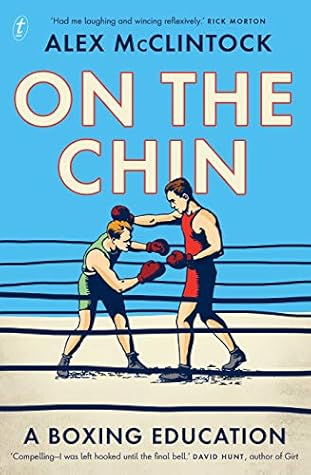
Review: On The Chin

Review: On The Chin
On The Chin written by Alex McClintock
My rating: 5 of 5 stars

Don’t know where I even learned of this book, but I’m so glad it was on my list for so long, and that I’ve now read it.

A masterpiece from start to end, it’s my ideal type of story. Weaving a personal tale of achievement with respectable self-deprecation, and a fond recall of the history and essence of a sport – one that every uninitiated person has an opinion on. Alex doesn’t hide the unflattering and worrying side of boxing.

It’s all clearly described with balance, with the added authority of someone who has gone a few rounds, but didn’t need to.

View all my GoodReads reviews

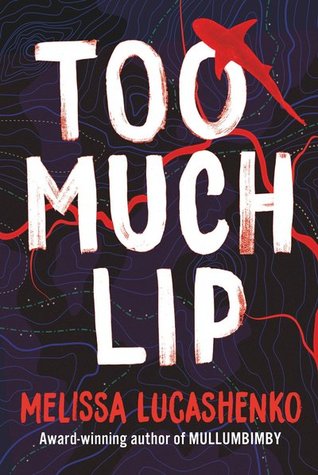
Review: Too Much Lip

Review: Too Much Lip
Too Much Lip written by Melissa Lucashenko
My rating: 5 of 5 stars

Getting through this story may have taken me several library loans and renewals. But definitely entertaining and thrilling throughout. Loved the characters, despite their flaws – even recognised quite a few. Life is gritty, life is rarely a complete fairytale. As I say (or maybe it was Wesley Snipes): Always bet on black.

View all my GoodReads reviews

Connect2Country Virtual Run Highlights

As COVID lockdowns began to ease, there were a number of virtual runs to motivate us to get out & about again.

Clothing The Gaps organised a “Connect2Country” run, which I ran through the You Yangs over two wonderful days.

I posted a few observations on other channels, which I belatedly brought here for better safe-keeping.

Running on my own, without a group meant I needed to bring my best selfie game:


    I perhaps took the #ConnectToCountry event name too literately on my first day of running, and tripped over and my body connected with the ground. A family on mountain bikes caught up and the Dad was clearly amused by it, “We needed a video of that.”


    Being terrified of snakes wasn’t ideal in bush, in warm temperatures. I didn’t see a single snake, but I did see 7 million sticks that looked exactly like a snake.


    Another trail runner giggled as she left the bathroom, thinking as she shook her hands dry her smart watch may have inadvertently alerted emergency services that she was in trouble. I said if I saw a helicopter, I’d let them know.


    The whole drive home on Day one was a struggle. Not from running, but the effect of the beers the night before.


    Splitting a marathon distance across two days was a huge advantage, I wondered if I’d run all future marathons in 22km chunks. Day two at 9 km mark was the usual “hit the wall” distance, though glided through it.


    You Yangs are pretty special. A shame they suffer the same problem as many places – too many tossers:

    Travel doodles

    I had almost forgotten that on some of my travels I enjoyed trying to draw the place while I was on the homeward flight.

    With my iPad on its final days, I’m relieved to download these travel doodles before I lost them.

    They’re certainly not the greatest works of art, but they’re fantastic records to me of those trips after all these years, reigniting many memories and connections.


    Madrid, Spain

    I traveled to watch Real Madrid play Liverpool in a Champions League clash in 2014.

    I still have fond memories of football, paella, sangria, and churros. I guess sangria was simplest to draw.


    India

    I traveled to Chennai a few times for work in 2014-15. Until I visited, I knew very little of the geography.

    I saw cows roaming everywhere, here’s one in particular I liked and enjoyed drawing.


    Singapore

    I loved walking the clean, safe streets of Singapore after a day of meetings.

    Here’s my take on the spectacular night scenery of the Marina Bay Sands.

    The next day had quite a different scene and feeling.

    No quick trip to ‘Singers’ is complete without their signature Singapore Chilli Crab. I took the taxi driver’s recommendation for the best in town, and was seriously impressed – while sitting with 100 others at tables setup in the car park.

    “No Sign Board Seafood” Geyland Road

    Traveling home to Australia

    It was always a long flight from the middle east to Australia. I remember seeing the welcoming colours of a sunrise here as we flew over what our pilot friends call the GAFA (Great Australian F*ck All).

    And I’m not sure if it was this trip, or another one, when we stayed on the Sunshine Coast and this was my view of the beach.

    Caloundra on the Sunshine Coast

    It’s been nice to see these drawings again after maybe half a dozen years. I find they bring back stronger memories than the photos I took, perhaps as I spent a lot more time drawing them while reflecting on the places and the wonderful times I spent there.

    It makes me wish I took the time more often to reflect and draw.

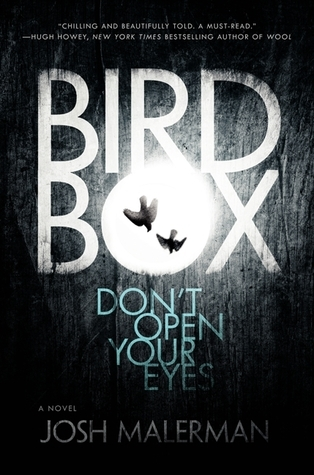
    Review: Bird Box (Bird Box, #1)

    Bird Box (Bird Box, #1) written by Josh Malerman
    My rating: 4 of 5 stars

    A world where we can’t safely see is a terrifyingly vulnerable place. To combine this with looking after two young children took this so much further, I felt unsafe to imagine where it might go next. Just brilliant.
    (People might be familiar with the horror movie starring Sandra Bullock. This is one of the few times I can pretentiously inform people, the book is actually better.)

    View all my GoodReads reviews

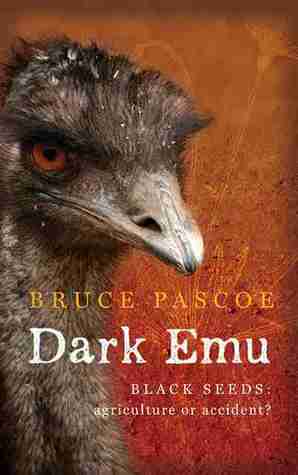
    Review: Dark Emu

    Review: Dark Emu
    Dark Emu written by Bruce Pascoe
    My rating: 5 of 5 stars

    I think everyone should read this amazing book. Dark Emu is filled with fascinating well-referenced revelations, to shed light on a contrary view of pre-colonised Australia. Our Aboriginal ancestors may have been more than primitive nomadic hunter-gatherers to have survived so well for 10,000s of years. Sadly that logic and the accounts from original white settlers has proven too much of a shock to some.

    It’s quite a poignant time to complete Pascoe’s book. I read it amid the Australian Federal Police’s enquiry and rejection to a (Federal MP endorsed) claim that Bruce is a fraud and no true Aboriginal. We’re also in a time of unprecedented bush fires, where Bruce has been volunteering on the front-line to save his community.

    Tomorrow is Australia Day, or Invasion Day depending on your viewpoint. My wish is that the detractors, who aim to quash an Australia or history which doesn’t align with their comfortable narrative, could open their eyes and read a book like Dark Emu.

    View all my GoodReads reviews