Category Archives: Pondering

Review: Zen and the Art of Motorcycle Maintenance: An Inquiry Into Values (Phaedrus, #1)

Review: Zen and the Art of Motorcycle Maintenance: An Inquiry Into Values (Phaedrus, #1)

Zen and the Art of Motorcycle Maintenance: An Inquiry Into Values (Phaedrus, #1) written by Robert M. Pirsig
My rating: 4 of 5 stars

I didn’t gain a great handle on Zen or motorcycle maintenance. Tho I thoroughly enjoyed the road trip through philosophy, and the role of Quality and how it enlightens our lives – if we allow it.

View all my GoodReads reviews

Review: Steve Jobs (The Exclusive Biography)

Review: Steve Jobs (The Exclusive Biography)

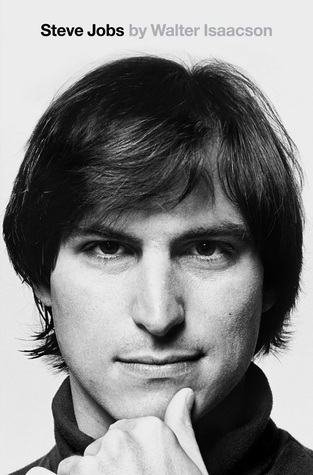
Steve Jobs (The Exclusive Biography) written by Walter Isaacson
My rating: 4 of 5 stars

A good insight into the genius and personality behind products and services we take for granted today. It filled some gaps in my knowledge, and strengthened some opinions I’d already made. A book is so much simpler to read when you know half the story already.

View all my GoodReads reviews

Applying EA to my life

Everyone brings their experience and life to their work, afterall it is who we are.  People may assume it works the other way also.  It’s not always the case.

I know chefs who never cook at home. And some strict, powerful people I’ve seen in the workplace are absolutely bubbly, softies away from the office.

It makes me wonder about myself. Do I bring inklings of my work at home?

Does it matter?  Probably not, though I’m curious.  It can always be helpful to adopt other experiences to improve other things.

In terms of my work, for the past seven years I’ve worked as an enterprise architect. I took a liking to information technology in my first real job.  Then worked my way up from being a system administrator, to a technical lead, to a project manager and business analyst.  Then I guess the role which took most interest, was putting all of these things together in the enterprise architecture office.
For me, EA is effectively using all of the skills and experience I’ve gained in IT to make sure there is a good forward plan based on an assessment across the relevant pieces of the IT and business landscape.  I always want to ensure any plan aligns with a deep knowledge of the environment, then we’re in good shape to make the right investments and changes. It is also involved in shaping solutions based on satisfying the different viewpoints that may exist.

Enterprise architecture is most useful where there are large investments, huge variety, or where a change of strategy is being introduced.

It seems a strange discipline to bring to personal life.

But I suppose, when I define it so generally, we all do this to an extent.

One thing that differs is the kind of tools that EAs often use.  I have become quite the excel junky to create and maintain all sort of inventories/catalogues, and to conduct analysis or report something.  I draw pictures (create models) to help understand the different components and how they fit together.  And I do ask “Why?” so often it’s probably very annoying. And all decisions are checked to ensure they’re based on documented principles to guide the direction.

I’ve never felt the need to use “tools” to my home life. Nor do I worry too much about us documenting the future plan, then sticking to it through governance.

However, like most households we do often have competing perspectives. My kids just want to have fun, parents have a different set of needs.  I feel I navigate these well, perhaps through having to deal with similar scenarios at work. We always manage to come to some form of agreement. Not that this is something unique to an enterprise architect.

Harvey Pekar suggests “Ordinary life is pretty complex stuff.” However, I think it’s less of an issue to get to the bottom of our decision-making. We happily live the consequences.

The big omission in my life, when compared to my enterprise architecture activities, is having a strategic viewpoint.  I’m doubtful though it’s something I really need to introduce to my personal life.
I do have goals, and each day I try to improve upon my habits – thanks to https://lift.do/.  As a family we have only rough ideas of what we’ll do in the future, and when.

I think that’s enough.

The saddest blog I hope I ever write

A tragic event rocked our new year.  On New Year’s Eve, a dear family friend’s son took his own life.

It still seems like a bad dream.

There was no prior warning, there were no signs. There seems to be no reasons.

An army of friends banded together to show the family their support and help. Though our help seems pretty trivial in the face of their heartache wondering why – perhaps a question they’ll have for the rest of their lives.  And we could offer no help to alleviate the pain that had cut so deep, none of them have eaten or slept in the four days since it happened.

We could really just let them know we’re there.

20140105-063958.jpg

Myles’s picture of his friend. He wants to make it into a card for the family

The boy was friendly with my two sons.  They both loved his sense of humour, and were drawn to his charisma.  So I felt it was right to tell them what happened, though I first Google-d to confirm the experts recommend it also.

It was a terribly tough conversation to have with the boys. The web advice was quite helpful. We obviously avoided sharing any specifics. There were useful messages about suicide being an illness, that the stress & unhappiness makes people forget there are always people to talk to; and that their actions were just an attempt to feel better when they thought there was nothing else they could do.  It’s a very sad, but important lesson.  And it was upsetting  to see my boys learn it so intimately.

I thought my five year old may be too young to understand. It was clear though he knew exactly what we were saying.  When we took them to visit the family the day after, he asked if the boy was there in a grave.  And on the way home, both my boys were asking really good questions about what could they do.  My nine year old has practically made it a mission to be there and check on all of his friends at school regularly.

In terms of my own feelings, I still find this very difficult to accept. How could things grow so overwhelming for a 15 year old that it comes to this? To his close family and friends, it makes no sense. To an outsider, it makes even less sense.

We already knew he was popular and well-liked.  His Facebook page lit up with an overwhelming number of posts from his friends, all sharing how highly they thought of him, and how much they’ll miss him. He couldn’t have known the level of support he had.  He could not have realised how many people felt broken at his passing.

The day after we heard the news, not by specific plan, I had my weekly run in their suburb.  It was a lovely cool, upbeat morning, with lots of positive thoughts.  Without even truly realising where I was, a solemn feeling swept through me as I came close to their neighborhood.  I suddenly had to stop, walk off course toward the entrance’s security gate.  Then my mind filled with visions of him on his bike on these same streets.  Usually with friends, most often making jokes and hearing his distinctive laugh, laughing hysterically.  And here I am in the dark silence of morning, almost fittingly cold and empty. I was overwhelmed with the thoughts of his demise.  His family still wide awake in the villa, feeling crushed by their loss. I turned back, felt the pure tragedy and became quite a blubbering mess.

At the end of a long morning run, I generally feel wonderful to be alive. That morning I felt more reflective on how lucky we are, and that we have a duty to make the most of our time.
Because, for whatever reason, some people aren’t here to enjoy this opportunity.  May they now rest in peace.

I’m weak with weaknesses

At a recent interview I was stumped by the common question about what I feel are my weaknesses. I knew it was a standard question, and did prepare for it at some stage, though when it was time to respond I almost drew a complete blank. The question followed in order from what I thought were my strengths. So perhaps I had not quite finished being in “beat my chest” mode.  Or perhaps the answer I thought I’d go with didn’t really resonate well enough.

When I’m nervous or feel awkward with a silence I often lead with a gag. I guess I was nervous or felt awkward, cause my first statement was along the lines of “I should give you my wife’s phone number, she can share a long list of my weaknesses”.  It’s not even true, though critical wife gags are quicker to devise than a thoughtful self-analysis.

There was a bit of a pause to give me time to think, and I did fumble through with an answer which seemed OK, though definitely not great.
So I realised, I was very weak at describing my weaknesses!

The benefit of things going less than ideal, it leads me to contemplate on a better answer.
I thought I’d get this down, and perhaps review it over time.

Perhaps posting such a topic to a blog with open comments is a way to crowd source better answers – or just trolling.

Most of the research suggests the question is used to test whether the candidate is self aware, and mature enough to realise short-comings, and whether they have made adjustments to become more effective.

I’ve certainly thought for long enough about my short-comings, and this is a good enough place to consider what adjustments to become better.

Ryan Brinkworth’s Weaknesses:

  • A perfectionist

For quite some time, mostly with my own work I’ve had a desire for things to be perfect.  My preference would be to work on things forever, to prevent passing it on for people to identify faults with it.  Being a perfectionist is apparently something I inherited from my father, and he inherited it from his father. Though, I’ve been intent on breaking with the tradition. I’ve seen value in getting stuff out there, and have even made it into a habit to share early drafts, to the point where I get a buzz with quantity of documents & revisions, rather than the quality.

I’ll still pick the eyes out of my work, and other things that have been handed to me.  Though I recognise, the value addition of a perfect piece of work is too low to warrant the amount of time it takes to make one.

  • Unorganised

In the past, such as my university days, I was tremendously poor at being organised.  It was a bit of  a curse how I could crunch many weeks effort into a single evening or two and still get through with flying colours.  Because I was such a gifted scrambler, it almost encouraged the behaviour of not staying on top of deadlines or where things were up to.  As I got older though, and the stakes become higher – such as having a family, I realised how stressful these situations are and that things would get missed.  It made me recognise the need to change significantly.

Many people talk about dull books that change their lives.  My eyes usually glaze over when I hear this.  For me, that one book did change my life in terms of my organisation was Getting Things Done by David Allen.  I’ve read many management and productivity books, think they’re useful, then very soon after I’d regularly, and quite happily ignore the advice.  The “GTD” system though, is something I can continue to use every day, since reading the book quite a few years ago.  Thanks to recognising that I was making things unnecessarily tough, and missing out on opportunities, I knew I could become far more organised with life and work.  And having a good system has really put far more focus on the proactive tasks, and reviews that I now enjoy.

So, while I managed to get by quite well without being organised.  I feel I am living life far better now because I’m staying on top of things thanks to a change in my behaviour and trusty processes I live each day.

  • Theoretical

Perhaps related to Weakness #1 about being a perfectionist, I have noticed I tend to prefer to base some of my decisions and actions on theories of what is right or wrong – in place of feelings, experience, or hearsay. In some respects, this is what university equipped me with as a strength.  However, in different roles and situations I’ve learned that this is not terribly useful at times.

Having a theoretical base is useful, as the thinking work and path to success is often done for you. Though, some audience or personality types are repelled by such assertions. I could argue why that’s the case, though it’s not useful here.

Regardless, I do see a purely theoretical approach as a weakness.  My career has always included some level of practice or experience, and over time I see I’m moving away from my ideals about what the best theory may be, and I’m often leading now with what I see are the practical and pragmatic approaches.  They will support a theory, but they’re not a theory alone.  That would be terribly weak.


This was the end of my initial list of thoughts, if I was able to answer the interview question over again.

It probably goes without saying I am still trying to perfect the response in my head.  Though please note, I have blogged my Weaknesses before it’s all perfect.  So I am certainly making progress.
 

Review: Outliers: The Story of Success

Review: Outliers: The Story of Success

Outliers: The Story of Success written by Malcolm Gladwell
My rating: 4 of 5 stars

I enjoyed Outliers. After reading it, I may go back and explore Gladwell’s more famous titles. In Outliers, Gladwell uses the benefit of hindsight to take the shine off the magic of success. He argues that success is often nothing more than circumstance, whether it is through culture, history, opportunity, or legacy. He presents an interesting range of cited examples, demonstrating that success is often down to one critical element, for example, the power of 10,000 hours of practice, or being born close enough to the start of the year, and so on. Depending on how you look at it, Outliers opens up the possibility to our own success, or closes the same door. Either way, it provides fascinating food for thought – particularly to hopeful parents of future hockey champions.

View all my GoodReads reviews

Review: For Crying Out Loud! (World According to Clarkson, #3)

Review: For Crying Out Loud! (World According to Clarkson, #3)

For Crying Out Loud! (World According to Clarkson, #3) written by Jeremy Clarkson
My rating: 3 of 5 stars

I enjoyed this holiday-reading book, altho quite a bit of the content is now outdated, and I missed a lot of the many references to UK celebrities or politicians. Clarkson has an enjoyable writing style, bouncing between exaggeration, insight, and sarcasm. And he tells a tale with perfect lead up and description, making me laugh out loud all too often.

View all my GoodReads reviews

Should we be Social after we die

Last year a dear family friend passed away from a heart attack. This morning on my smart phone I received a Notification it was his birthday today, “Tap to write on his Timeline!”

I decided not to.

It made me wonder though, what is the protocol in these socially-connected times when you do pass away?

Social networks are quite a new thing for me – I believe he was my first Facebook friend to pass away. I was unsure how it worked. Then I found it was touching to see the messages of condolence free flowing onto his page, and for people to share their feelings and memories of such a loved person.

One particular tribute from a colleague of his, turned out to be a long-lost school friend of mine whom I reconnected with, and shared our own stories about him.

His Facebook profile still lives on today. It’s a nice time capsule of the thoughts and wishes of his friends and families, and a report on the funeral. I treasure the physical programme from funerals I attend, and keep them as a record. Perhaps the persisting social presence of those loved ones who pass away is the modern day equivalent where you don’t attend the funeral.

Facebook has several set Relationship statuses for people to use. I’ve seen people evolve from Single, to In a Relationship, to Married. And sadly the opposite direction from Married, to It’s Complicated, and back to being Married or Single again.

But what to do about the “living” status of your (online) presence?

It’d be too late for us to update our own status when we’ve left this mortal coil. So my wife and I agreed we’d hack each others Facebook profile to make the change, and inform our Friends in the present condition.

I recognise this is truly a First World Problem. And it’s an unimportant one at that. But I do find it interesting to ponder.

In this digital connected age, our physical existence has an important relationship with our virtual existence. For completeness and ongoing relevance, we may need greater consideration on the impact of one on the other.

For the record, #iamstillhere ..

My Enterprise Architecture elevator pitch

There’s always some debate on the value of enterprise architecture, and particularly whether it deserves any real focus on it.

I have definitely been in the pro-EA camp, having been in the role for 10 years.

With anything you wish to sell, it’s handy to have an “Elevator Pitch” ready.
For those unfamiliar, an elevator pitch is a short, enticing dialogue you have ready in the event that you share an elevator with an influential executive [see my tweet below on Elevator Pitches].

EA Elevator Pitch

Enterprise architecture is a strategy that directs investment across business and technology changes to help design the enterprise that best delivers value.

 A well-defined enterprise architecture helps you to make better decisions through understanding the company’s goals, operations, information, application and technology assets as a set of logical portfolios.

 This is important because strategies only succeed where there’s an alignment and relationship between the assets that support it.

 Enterprise architecture as a strategy can save you money through standardising and optimising what’s currently available.

 But enterprise architecture’s real value-add is enabling success by design – not by chance, experience, so-called best practice, or gut feel.

Addendum:

I wrote this pitch in around 2009. Even with more experience, I still have the same thoughts around EA benefits.

My views have changed though on the appropriate focus to place upon EA, and the future of it.

I can even relate to some in the Enterprise Architecture is dead movement (and here).

To be clear, it’s not dead. All enterprises will continue to have an architecture.

The way to design it appropriately is just increasingly becoming more pragmatic and led by communities on the ground, rather than towers of ivory in theoretical clouds.

EA lost a lot of ground building itself into a so-called specialisation or discipline through academic exercises. Part of the solution is to demonstrate value, and for us all to get our hands dirty.

X multiplied by Y = why

Many runners enjoy running in groups. Running with company can help in terms of safety, and just extra enjoyment to pass the time.

However, everybody runs at different paces.

I recently experienced a situation where runners set off at different times, running at their own speeds, and hoped to meet up at some point on the same route.

It seemed like the classic high school maths question, “If Train #1 leaves the station travelling at 60km/hr and 30 mins later Train #2 leaves the same station travelling on the same train line at 80km/hr, how long before the trains collide?”.

I’m not good at algebra at the best of times. Let me tell you though, while running I found new levels of hopelessness trying to solve the puzzle of where one runner would catchup to others running at different paces.

Let me document the solution now, for posterity – thanks to http://www.algebra.com/.

The translated problem:

If Runner “Tortoise” leaves at 4:30am travelling at 9km/hr, and Runner “Hare” leaves at 5:00am travelling 12km/hr. At what distance will they meet?

T’s lead = 4.5 kilometres (30 mins @ 9km/hr)

Catching up speed is 3 km/hr (H’s speed 12km/hr – T’s speed 9km/hr)

Solution is to divide the 4.5 kilometre lead, by the speed which H can made up,  3. 

So the answer is…. 1.5 hours.

Let’s test.

The distance which T covers in 1.5 hours is 13.5 kms, then add the 4.5 km head start from beginning 30 mins earlier would mean they would complete 18 kms.

The distance which H covers in 1.5 hours is 18 kms.

The hare after sleeping-in should meet the tortoise after 18kms.